RESEARCHERS BELIEVE recent discoveries made in some underwater caves in the Bacteria could provide clues about how ocean life formed on Earth millions of years ago, and perhaps give hints of what types of marine life could be found on distant planets and moons.
The finding is a result of teamwork between researchers at texas ‘n’ M university at Galveston and Penn state University. Tom Iliffe, professor of marine biology at the Texas A ‘n’ M-Galveston campus, and graduate student Brett Gonzalez of Trabuco Canyon, Calif., examined three “blue holes” in the Bahamas and found that layers of bacterial microbes exist in all three, but each cave had specialised forms of such life and all different depths, suggesting that microbial life in such caves is continually adapting to changes in available light, water chemistry and food sources.
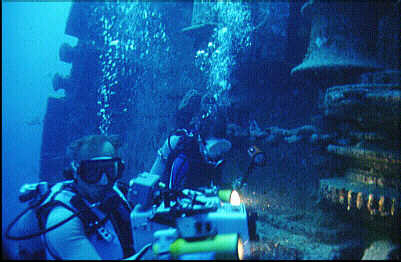 “We examined two caves on Abaco Island and one on Andros Island. One on Abaco, at a depth of about 100 feet, had sheets of bacteria that were attached to the walls of the caves, and almost one inch thick. Another cave on the same Island had Bacteria living within poisonous clouds of hydrogen sulfide at the boundary between fresh and salt water.” Iliffe explained.

No comments:
Post a Comment